Jessica Miles, MS, RN, CNS, outlines how oncology nurses can overcome time, access, and fear of rejection to share practice evidence.
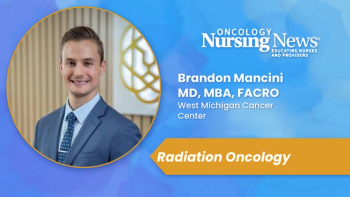
Brandon Mancini, MD, MBA, FACRO, shares how nurses and APPs can anticipate SBRT toxicities, ease fatigue, and help prevent ER visits.
Knowing a patient's baseline before radiation begins is the single most important assessment oncology nurses and advanced practice providers (APPs) can make, because it allows them to recognize whether a new symptom is treatment related, a worsening of something preexisting, or something unrelated.
In the second installment of a 2-part interview with Oncology Nursing News, Brandon Mancini, MD, MBA, FACRO, a radiation oncologist at West Michigan Cancer Center and clinical assistant professor in the Department of Medicine at Western Michigan University Homer Stryker M.D. School of Medicine, outlined how nurses and APPs can anticipate the timing of stereotactic body radiation therapy (SBRT) toxicities, manage fatigue during palliative radiation, coordinate care to reduce emergency department visits, and counsel patients who are anxious about newer radiation modalities.
SBRT delivers highly targeted radiation over 1 to 5 treatments. In prostate cancer, the phase 3 NRG-GU005 trial found that SBRT reduced long-term bowel complications compared with moderately hypofractionated intensity-modulated radiation therapy,
Mancini: For SBRT, that's targeted radiation over a few treatments, anywhere from one to five treatments, but typically targeted down to the millimeter or submillimeter level, and really the side effects just depend on where in the body that's being utilized. So there is SBRT for prostate cancer. That means five treatments to the prostate that take place over about one and a half to two weeks, and so anticipating the side effects associated with that is super important. And typical side effects, like after two or three treatments, a gentleman might notice some urinary bother or some changes along those lines. So really preparing the patient and being ready as a practitioner that, again, after two or three of these treatments, this patient is probably going to be noticing some changes. That allows them to be proactive in that space. Again, both warning and educating the patient, but also knowing that, hey, so-and-so is now a couple treatments in, we've got to be looking out for this, is very, very important.
Outside of that, if you think of a lung tumor, that's a more interesting situation, in the sense that that same radiation might be three treatments or five treatments over a week or week and a half. But sometimes some of the irritation of the lung tissue manifests many weeks down the line. Luckily, it doesn't happen to a large number of people, but it's that delayed interaction: treatment ends now, and then maybe 4 to 6 weeks later symptoms develop. And just having, again, the general awareness that these things are possible, and the timeline with which this could occur, so that they can proactively address or adjust what needs to happen.
What's super important any time a patient's undergoing any sort of therapy, for APPs and nurses, is to really know that patient: what baseline symptoms they have, what their performance status is, other things that are bothering them. So that if something else arises in the future, you know if it was preexisting or not, you know if it's a worsening of something that was already there, or if it's something brand new. And obviously, being educated on the type of side effects anticipated for the unique area that they're being treated can help them triage and figure out if this is related to treatment or not related to treatment, so that they can work with their team to help that patient best.
Mancini: Absolutely. They interact so, so much, and a lot of times more frequently than a physician does with their patient throughout that process, especially undergoing radiation therapy, where it might be this Monday-through-Friday treatment for several weeks. The nurses and the APPs might be seeing them more frequently than the physician. And so it always comes down to knowing your patient, knowing who they are, being able to manage them. And really, that helps you do your job better across the board, develop deeper and better relationships with the patients, and be able to meet their needs throughout that process.
Mancini: During palliative radiation, fatigue, or feeling tired with treatments, is literally the number one side effect from any cancer therapy. And so, again, this goes back to knowing your patient, knowing where they started from, because enduring systemic therapies can make someone tired. Having cancer that has spread elsewhere can make someone tired. And then obviously more appointments, more treatments, and reaction to any form of new therapy can make someone tired.
So if someone is fatigued, it's also making sure that they're checking all the other boxes, like sleep quality. Maybe they're fatigued because they're actually in pain, and they're not sleeping throughout the night because they're woken up so frequently from pain. So maybe it's optimizing and maximizing pain control to help that aspect. It's also looking at things like nutrition and hydration, both of which can cause a ton of fatigue if they're not optimized as well. And sometimes that can be hard. Someone that has metastatic cancer that's getting palliative radiation might have a decreased appetite at baseline, and so it's, again, knowing that patient and working with them and their other providers to try to optimize that aspect of their life.
I think for those that have capacity and interest, and maybe they're having palliative radiation for an asymptomatic lesion in a bone that's non–weight bearing, actually some form of exercise and getting the heart rate up can actually mitigate fatigue and make people feel better. Because when we feel tired, we do less. When we do less, we get some deconditioning, and then that can actually create even more and more fatigue. And so: knowing the patient, meeting them where they're at, trying to maximize nutrition, hydration, sleep, and any other effects that they're having, and also encouraging some sort of exercise to get that heart rate up, to maintain or build muscle throughout that process.
I would also encourage the utilization of palliative care teams when possible or able, because palliative care teams are obviously specialists; they're symptom management specialists. That allows patients to get optimally cared for from a symptom management perspective, where our APPs and oncology nurses can then focus on the therapy side of it as well. And so I think a combination of all of that is a good way to optimize that patient's journey.
Mancini: I think it goes back to what we've focused on today, which is knowing your patient inside and out and knowing their baseline. I think without a doubt, that's the most vital, because if you know a lot about that patient coming in, including their history, not just their physical status but their history as well, what they've been through, what side effects might be lingering from some other modality before, what their baseline function is for the area that you're treating, that's just going to solve so many more problems, or help you get to a solution much more quickly. Because when something negative arises, you know what they were before, so you know how to hopefully get them back to that status, or at least close to it. So: knowing your patient, knowing their history, knowing their physical status, and going from there.
Mancini: In general, we think of a lot of different disease sites where hydration, nutrition, and just how difficult these treatments can be when combined. Because a lot of times it might be radiation combined with things like chemotherapy, and both are creating side effects, and both are creating patients at risk for going to the emergency department. When you're able to be proactive, that's going to be incredibly helpful.
So if we take throat cancer, for example, very, very difficult from a radiation perspective, because you have a lot of irritation, right? Pain with swallowing, mouth sores, dry mouth, skin changes, etc. And then you also have chemotherapy that's causing people to feel yucky as well. And so being proactive: knowing that by week two or so, maybe we need to be getting IV hydration incorporated as a normal mainstay throughout that process. You get your nutrition consult early to help if and when they're unable to tolerate certain types of foods. Let's make sure they're meeting their caloric requirements so that nutritionally they're feeling good. And maybe, if a center allows and the robustness is there, palliative care, those symptom management specialists, right from the beginning or at week two or three, so that they're going to meet with them once a week or once every other week to adjust and address any symptoms throughout that process.
So proactive planning is incredibly important, because you can definitely minimize emergency visits by knowing what side effects could come, identifying them the earliest, and addressing them the earliest when you're seeing them. One advantage of radiation therapy is it's typically a Monday-through-Friday treatment, so you're actually seeing these people many, many times throughout the week. And so trying to help them during that week optimize prior to the weekend is very, very important, so that they're in their most comfortable position, but you're also minimizing the likelihood that they're going to have major changes that would lead to an emergency visit. So: proactiveness, working with others, and creating comprehensive proactive planning that can help address some of the most common ailments that arise during a treatment.
Mancini: Anytime there's anxiety related to treatments, I feel like education is the number one way to mitigate a lot of that. So sitting down with them; APPs and oncology nurses know the most about their craft and can help in that education process: the things that might happen most likely, and the things that possibly can happen but don't happen very, very frequently. Right? You're able to quantify or comfort someone. If a side effect is a one in 1000, then they need to know that it doesn't mean that every side effect that's noted in consent sheets or on a website will happen to that unique person.
I think the general experience that patients have receiving these therapies is very, very important, as well as obviously realizing the possibilities of the rare things that can occur. Obviously, they have to be comfortable moving forward with the treatment, with consent, and so forth. But to me, it's always been [that] education is a very good way: having information that's practical, that's applicable, informative, telling them how often things will happen, and how to help mitigate and minimize side effects and maximize how they're feeling. That can allow [anxiety] to be minimized as much as possible. You can provide worksheets and diagrams and things like that, but I think education, spending time, being that open ear to hear their concerns and address them, you can really help people a lot if you do that throughout.
1. ONN Staff. SBRT reduces bowel toxicity in localized intermediate-risk prostate cancer. Oncology Nursing News. September 4, 2026. Accessed November 16, 2026. https://www.oncnursingnews.com/view/sbrt-reduces-bowel-toxicity-in-localized-intermediate-risk-prostate-cancer
2. ONN Staff. FDA approves Pluvicto for PSMA+ mAPMN/S prostate cancer. Oncology Nursing News. July 31, 2026. Accessed November 16, 2026. https://www.oncnursingnews.com/view/fda-approves-pluvicto-for-psma-mapmn-s-prostate-cancer