
Opinion|Videos|September 2, 2026
Shifting From Reactive to Proactive Adverse Event Management
Author(s)Amanda Edmond, PA-C
Proactive prophylaxis with amivantamab and lazertinib cuts rash, paronychia, and clots using daily skincare, antibiotics, and anticoagulation to keep patients on therapy.
Advertisement
Episodes in this series
Prophylaxis marks the shift from reacting to adverse events to getting ahead of them, says Amanda Edmond, PA-C, of Banner MD Anderson Cancer Center at Banner Gateway Medical Center, discussing amivantamab plus lazertinib in EGFR-mutated non-small cell lung cancer. In MARIPOSA, no prophylaxis was used and clinicians responded only after problems appeared, while COPERNICUS builds upfront prophylaxis against venous thromboembolism, including pulmonary embolism and deep vein thrombosis, into the protocol alongside skin care prophylaxis for paronychia and rash. Most adverse reactions appear in the first 4 months then taper substantially, a timeline Edmond uses to give patients a light at the end of the tunnel. The regimen includes daily chlorhexidine nail soaks, a ceramide-containing moisturizer, daily sunscreen, twice-daily doxycycline or minocycline, and an anticoagulant, started before cycle 1, day 1. Anticoagulation for the first 4 months brought venous thromboembolism from about 37% in MARIPOSA back toward the 10% baseline in lung cancer.
Advertisement
Related to this article

In the phase 2 EVITA trial, vitamin C did not slow clonal growth but was linked to fewer serious adverse events and longer exploratory survival.
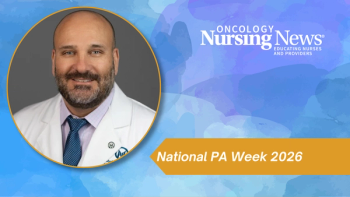
In observation of National PA Week, Moffitt PA Mark Honor discusses the expansion of APPs and key collaboration strategies for oncology nurses.

Beth Faiman details the new IMS/IMWG consensus definition of cure for multiple myeloma, requiring 5 years of treatment-free remission.

Oncology clinicians gathered to review relapsed CLL care options, CAR T-cell trial updates, and advanced practice provider roles.
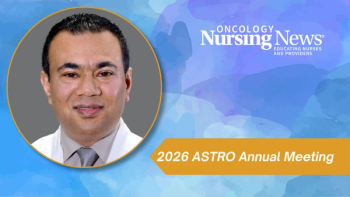
At ASTRO 2026, Suresh Rana details how AI-driven contouring accelerates care timelines, requiring rigorous team monitoring and early nursing input.
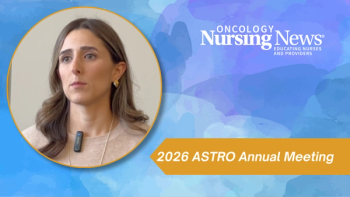
At ASTRO 2026, Dr. Erica Braschi Jordan details toxicity tracking, physical therapy referral, and quality of life in proton regional nodal irradiation.

At ASTRO 2026, Dr. Mishaal Munir details how nurse-led triage workflows and prompt symptom escalations improve care for breast cancer brain metastases.
ASTRO 2026 presenter Kayla Kafka-Peterson details an Adapt-Adopt-Build model to bridge global brachytherapy nursing gaps and standardize perioperative care.
Advertisement
Advertisement
Trending on Oncology Nursing News
1
FDA Expands Anktiva Approval to Papillary-Only BCG-Unresponsive NMIBC
2
On-Body Injectors: What Oncology Nurses and PAs Need to Know
3
Metastatic Breast Cancer: An NP and a Nurse-Patient on Hope and Honesty
4
Understanding Opdivo Qvantig® (nivolumab and hyaluronidase-nvhy): A Cancer Treatment with A Faster Delivery*
5