Marieta Branis, APN, discusses individualized breast cancer care, monitoring for ADC and oral therapy toxicities, younger patients, and survivorship.
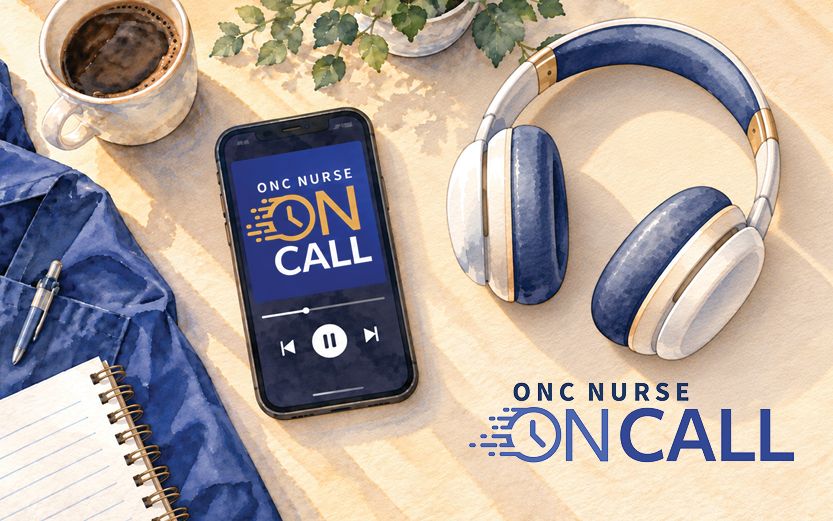
Emily Beard discusses how nurse navigators act as essential bridges, leveraging clinical intuition and time to address complex patient needs.
In the latest episode of the “Oncology Nurse on Call” podcast, Patricia Jakel, MN, RN, AOCN, and Stephanie Desrosiers, DNP, MSN, RN, AOCNS, BMTCN, co-editors-in-chief of Oncology Nursing News, sat down with Emily M. Beard, BSN, RN, OCN, CBCN, BHCN, an oncology survivorship navigator at the Winship Cancer Institute at Emory University. With a 20-year career in oncology navigation, Beard shared profound insights regarding the pivotal role navigators play in identifying and addressing the hidden, complex barriers that patients face during cancer care.
According to Beard, the core of navigation lies in the ability to uncover issues that are not immediately visible in a clinical setting. "The decisions that people are making now, while in the middle of cancer care, are so complex," she noted, highlighting how patients often mention minor details that represent major hurdles, such as transportation barriers, caring for elderly relatives, or managing childcare. For Beard, addressing these issues requires constantly asking, "What don't we see here? What are we missing? What's going on below the surface?"
This clinical intuition was demonstrated in a case involving a young woman in her 30s diagnosed with an aggressive cancer. Despite having a supportive mother and fiancé present during her medical appointments, Beard noticed a subtle shift in the patient's demeanor. "Her eyes would glaze over and I sort of noticed that there was almost like she was dissociating a little bit," Beard recalled.
When the patient failed to attend her chemotherapy teaching appointment, Beard trusted her clinical instincts and called her. The patient, sobbing, revealed a deeply personal barrier: she refused to go through with treatment because she could not bear the thought of being a "bald bride." Believing her fiancé "didn't sign up for this" and that she would be a disappointment, she was prepared to abandon her care. Beard, who had recently married, deeply related to her. "In that moment, it just became about so much more than her cancer," Beard said, describing it as a "beautifully tragic, profound moment" of privilege where the patient opened up to her.
Rather than rushing the patient, Beard and her clinical team chose to "take a beat" and pause treatment for about 2 weeks. This window allowed them to involve a social worker and coordinate scalp cooling supplies. Additionally, this pause facilitated a critical conversation about fertility preservation that would have otherwise been missed in the rush to start treatment. The patient successfully visited a fertility clinic and preserved embryos.
Beard emphasized that navigators possess the unique luxury of time, which differentiates them from clinical providers bound to tight schedules. "We have a little bit more of an expectation of the schedule, we're not held to the schedule quite like our clinical providers are," Beard explained, noting they do not have to rush patients out of a room in 10 minutes. While she did not perform the medical procedures herself, Beard acted as the "bridge" and "connector" that linked the patient to vital resources.
Desrosiers agreed, noting that an experienced nurse's intuition—though unmeasurable—is a vital clinical tool that prevents patients from falling through the cracks. Desrosiers concluded that this enduring connection defines the profession: "We get the privilege of journeying with patients from diagnosis to end of life, and there is something special about that."