
Nurse practitioners should listen to patients’ concerns and be ready with questions when it comes to germline testing, according to an expert.
Nurse practitioners should listen to patients’ concerns and be ready with questions when it comes to germline testing, according to an expert.

Tara Sweeney, BSN, RN, OCN, CHPN discussed best care for the health and well-being of a person across all stages of their cancer survivorship.
Social determinants of health like transportation and financial increased the occurrence of psychoneurological symptoms in breast cancer survivors.

In accordance with CMS quality measures, interventions like provider/patient education and better access to care help reduce ED visits after chemotherapy.
Oncology nurses and APPs can enhance patients’ comfort by counseling patients on what integrative care is and working to make those options accessible.
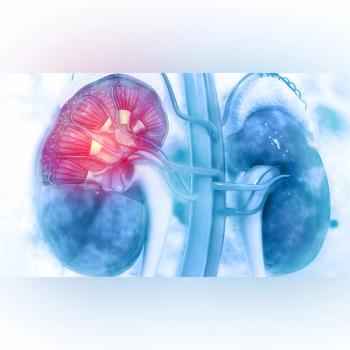
The subcutaneous formulation of nivolumab showed comparable efficacy and safety to the IV formulation in advanced clear cell renal cell carcinoma.
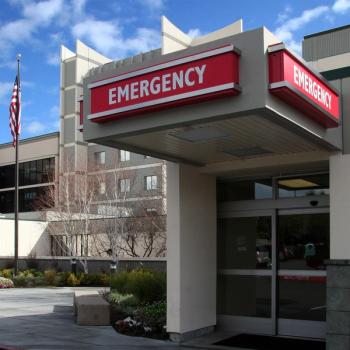
Using risk assessment and nurse education in the High ED/Admission Risk Therapy (HEART) protocol reduced ED visits by 18% after chemoradiation treatment.

The 2025 Extraordinary Healer® Award was presented during the 50th Annual Oncology Nursing Society Congress, recognizing oncology nursing professionals' dedication and impact.

A nurse-driven, verbal workflow to place tocilizumab orders contributed to safer and more effective delivery of tocilizumab for cytokine release syndrome.
After reviewing the evidence, nurses switched from heparin-based flushes to all saline flushes for patients disconnecting chemotherapy at home.
An oncology nurse explains how her institution created a surgical path card that improved wait times and patient satisfaction in adults undergoing cancer surgery.

The implementation of a nurse navigator in a lymphedema program has helped patients with the condition obtain timely care, which can potentially improve outcomes.
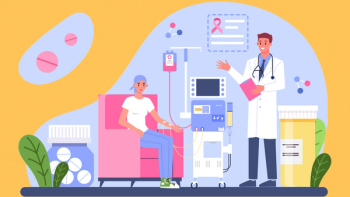
The role of a verification nurse can lead to several benefits, including the prevention of errors from reaching the patient, decreased workload, and potential cost savings from less drug waste.

Poor sleep quality among those with lung cancer and COPD emphasize the need to develop effective assessment strategies.
Nurse coordinators should aim to transmit information to both the patient and caregiver during outpatient CAR T-cell treatment process.

A pilot study proved that a nurse-coordinated approach shows promise in treating more than just 1 symptom among patients with cancer.
Advanced practice providers can lead clinical teams and patients to boost oncology clinical trial enrollment, a nurse practitioner explained.

A subgroup of patients from the 3 CARTITUDE trials experienced cranial nerve palsy after treatment, most of whom were men.

As symptom severity can vary by patient, it is key for nurses to increase assessment for early intervention of patients with head and neck cancer following treatment, according to Meredith Cummings, PhD(c), BSN, RN, OCN.
Establishing a nurse-led system to administer tocilizumab in patients receiving bispecific antibodies tended to get the immunosuppressive drug to patients faster.

A feasibility study on the use of a mobile application for patients after undergoing a stem cell transplant may help care teams quickly identify and treat graft-versus-host disease.

Patients who were given telehealth, vs in-person, exercise programs to manage their symptoms from cancer care experienced similar outcomes, highlighting an alternative for providers to consider.

Results from the CARTITUDE-2 trial support cilta-cel in patients with multiple myeloma, which addresses the unmet needs of these patients, an expert presented.
An oncology nurse details strategies used at his institution to reduce burnout — which can ultimately decrease the rate of “silent quitting.”

Patients in the CARTITUDE-4 trial experienced a high response rate to the treatment as early as their first relapse.
The establishment of a multidisciplinary committee can help identify opportunities to best face the ongoing cancer drug shortage.
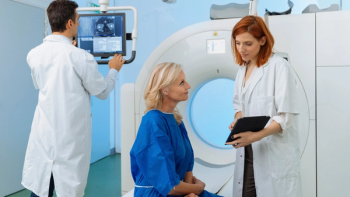
Tools to educate oncology nurses and patients on the use of Mepitel film to prevent radiation dermatitis has improved the workflow around its introduction to patients with breast cancer, as well as its application and maintenance.
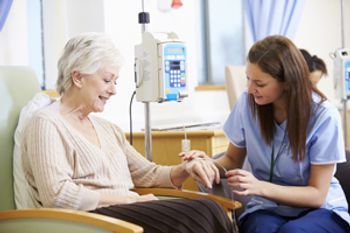
Older patients with cancer demonstrated a moderate to high symptom burden, leading to the need for routine symptom assessments and tailored management interventions.

There is room to improve drug adherence, patient education, and adverse event (AE) management for interstitial lung disease and cardiac AEs, according to Patricia Jakel, RN, MN, AOCN.

Iris app aims to leverage accessible technology to deliver supportive care to all patients with cancer.