

A subgroup of patients from the 3 CARTITUDE trials experienced cranial nerve palsy after treatment, most of whom were men.
A subgroup of patients from the 3 CARTITUDE trials experienced cranial nerve palsy after treatment, most of whom were men.

As symptom severity can vary by patient, it is key for nurses to increase assessment for early intervention of patients with head and neck cancer following treatment, according to Meredith Cummings, PhD(c), BSN, RN, OCN.
Establishing a nurse-led system to administer tocilizumab in patients receiving bispecific antibodies tended to get the immunosuppressive drug to patients faster.

A feasibility study on the use of a mobile application for patients after undergoing a stem cell transplant may help care teams quickly identify and treat graft-versus-host disease.

Patients who were given telehealth, vs in-person, exercise programs to manage their symptoms from cancer care experienced similar outcomes, highlighting an alternative for providers to consider.

Results from the CARTITUDE-2 trial support cilta-cel in patients with multiple myeloma, which addresses the unmet needs of these patients, an expert presented.
An oncology nurse details strategies used at his institution to reduce burnout — which can ultimately decrease the rate of “silent quitting.”

Encouraging responses were observed in most patients with relapsed/refractory follicular lymphoma treated with loncastuximab tesirine and rituximab.

Patients in the CARTITUDE-4 trial experienced a high response rate to the treatment as early as their first relapse.
The establishment of a multidisciplinary committee can help identify opportunities to best face the ongoing cancer drug shortage.

Tools to educate oncology nurses and patients on the use of Mepitel film to prevent radiation dermatitis has improved the workflow around its introduction to patients with breast cancer, as well as its application and maintenance.

Older patients with cancer demonstrated a moderate to high symptom burden, leading to the need for routine symptom assessments and tailored management interventions.

Patients with BRCA wild-type triple-negative breast cancer treated with olaparib on a gap schedule with chemotherapy did not experience improved responses compared with chemotherapy alone in the neoadjuvant setting.

Over the last 5 years, 57% of drugs approved by the FDA for a cancer-related indication did not show a clinical benefit in confirmatory studies.

Patients with gastric/GEJ adenocarcinoma treated with cadonilimab plus oxaliplatin and capecitabine obtained a survival benefit regardless of PD-L1 expression.

Criteria for progression-free and overall survival endpoints in patients with endometrial cancer with mismatch repair proficient disease were not met.
Trial data support potential treatment options with durvalumab-based regimens for advanced or recurrent endometrial cancer.

Patients across endometrial cancer subgroups derived a favorable survival benefit with pembrolizumab plus chemotherapy in the KEYNOTE-868 trial.
Patients with microsatellite instability high primary advanced or recurrent endometrial cancer derived a significant survival benefit when treated with dostarlimab plus chemotherapy.

Patients with platinum-resistant or -refractory epithelial ovarian cancer treated with olaparib plus cediranib did not experience improvements in PFS and OS compared with chemotherapy.
Further evidence strengthens the support of mirvetuximab soravtansine as a new standard of care for folate receptor-alpha—positive ovarian cancer resistant to platinum chemotherapy.

Although frontline treatment with lenvatinib plus pembrolizumab improved ORR and PFS, it did not improve OS when compared with placebo in patients with head and neck squamous cell carcinoma.

Patients with metastatic urothelial cancer treated with frontline maintenance therapy with avelumab following platinum-based chemotherapy in the real-world setting had similar outcomes as observed in the JAVELIN Bladder 100 trial.

Patients with hematologic malignancies who received Orca-T improved survival rates compared with PTCy in those receiving myeloablative conditioning, according to findings from a retrospective analysis.
Immune engager therapies, according to a retrospective study of real-world patients, had the best rates of responses and progression-free survival in patients with multiple myeloma whose disease relapsed after treatment with idecabtagene vicleucel.
Patients with relapsed/refractory chronic lymphocytic leukemia or small lymphocytic lymphoma treated with lisocabtagene maraleucel experienced durable responses.
The antifungal prophylaxis azoles did not impact the safety and efficacy of ruxolitinib in patients with graft-vs-host disease.
Patients with GVHD treated with ruxolitinib plus belumosudil experienced an overall response rate of 55%, which may suggest an interaction between inflammatory pathways.
Compared with placebo, ruxolitinib cream significantly improved body surface area in patients with cutaneous graft-vs-host disease in a phase 2 trial.
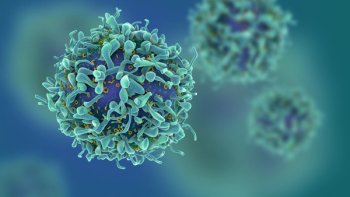
It may be feasible to use brexucabtagene autoleucel for the treatment of patients with relapsed/refractory B-cell acute lymphoblastic leukemia with central nervous system involvement.