

Anjali Albanese spoke about the unique emotional and psychosocial challenges faced by younger adults following a cancer diagnosis.
Anjali Albanese spoke about the unique emotional and psychosocial challenges faced by younger adults following a cancer diagnosis.

At SGO 2026, the BEHOLD-1 trial revealed a 62% ORR for mocertatug rezetecan in PROC, offering a manageable new ADC option for oncology nurses to track.

1INSPIRE data at SGO 2026 confirms frontline niraparib (Zejula) has a manageable safety profile with low discontinuation rates in ovarian cancer.

Mirvetuximab soravtansine shows 16.4-month OS in ovarian cancer, though poor ECOG status and toxicity significantly impact life expectancy.

Data at SGO 2026 showed gynecologic cancer survivors face high rates of untreated LUTS and missed radiation cystitis diagnoses after treatment.

Dr. Michael Wong of Roswell Park explains why melanoma survivors must prioritize skin barrier protection over tanning to prevent further UV injury.

Dr. Don Dizon discusses why early fertility referral and avoiding clinical assumptions are vital for young breast cancer patients at diagnosis.

Alembic Pharmaceuticals receives FDA approval for Methotrexate Injection for patients with cancer.

The OPTIMAL trial shows oral DHP107 matches IV paclitaxel efficacy in HER2-negative metastatic breast cancer with lower rates of neuropathy.

Phase 3 trial results show letrozole monotherapy is not noninferior to chemotherapy followed by hormone therapy for patients with advanced LGSOC.

Phase 2 GOG 3039 trial data from SGO 2026 shows abemaciclib and letrozole improved PFS in patients with advanced or recurrent endometrial carcinoma.

Explore how Jessica MacIntyre, ONS President, is transforming oncology care through APP fellowships, a new skin toxicity database for diverse skin tones, and innovative survivorship models at Sylvester Comprehensive Cancer Center.

New phase 2 data confirms the Avmapki Fakzynja Co-pack offers lasting efficacy and stable safety for patients with recurrent KRAS-mutated LGSOC.

Phase 3 ROSELLA data shows relacorilant and nab-paclitaxel reduced death risk by 35% in platinum-resistant ovarian cancer, a new preferred treatment.

The phase 2/3 OptimUM-02 trial found darovasertib plus crizotinib improved survival for patients with HLA-A*A2:01-negative metastatic uveal melanoma.

The SISTER trial finds 1:1 peer support significantly improves endometrial cancer treatment completion for Black women, per 2026 SGO Meeting data.

Eliya Shachar, UCLA Health, says toxicity risk is not independently tied to age or demographics, reinforcing consistent monitoring and individualized care for all patients.

FDA accepted the NDA for TLX101-Px, a PET imaging agent for glioma, with a Sept. 11, 2026 decision date, aiming to improve assessment of tumor progression.

Nurses can catch early IO toxicities through routine symptom checks and support long-term care, as effects may persist after treatment ends.

A program promoting systemwide change, staff engagement and safety culture may improve chemotherapy administration and toxicity management globally, expert says.

Gotistobart reduced death risk by 54% and doubled 12-month survival vs chemo in pretreated advanced squamous NSCLC, per PRESERVE-003 results.
High patient loads, limited advocacy roles and unsafe work environments challenge oncology nurses in low- and middle-income countries.

Nuvalent submitted an NDA for neladalkib in TKI-pretreated ALK+ NSCLC, supported by ALKOVE-1 data showing systemic and intracranial activity with tolerability.

Zongertinib elicited responses in patients with advanced HER2-mutant NSCLC, showing intracranial efficacy in those with active brain metastases, per phase 1b Beamion LUNG-1 data.
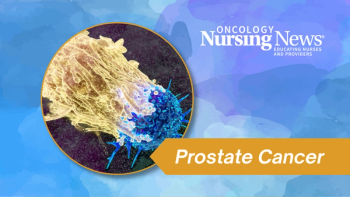
A diabetes drug may help activate exercise-related metabolic pathways in patients with prostate cancer, offering insight into how to support metabolic health during treatment when physical activity is limited.
Thomas W. Flaig, MD, discusses the 2026 NCCN Guidelines updates for bladder cancer, highlighting the role of enfortumab vedotin, pembrolizumab, and the shift toward neoadjuvant ADC therapy.

Learn about the rising cancer burden, the importance of patient navigation, and strategies to close the equity gap in low-resource settings.

New NCCN Guidelines for colorectal cancer emphasize structured exercise and molecular profiling to reduce recurrence.
Sandy Srinivas, MD, of Stanford Cancer Center, discusses the critical role of patient selection, chemo-fitness, and managing comorbidities when selecting ARPI doublets for older patients with prostate cancer.

The FDA has granted full approval to brexucabtagene autoleucel for relapsed/refractory mantle cell lymphoma based on ZUMA-2 data.