
Beth Sandy, CRNP, of Penn Medicine discusses therapeutic advances in thoracic oncology, toxicity management, and overcoming financial barriers.
Beth Sandy, CRNP, of Penn Medicine discusses therapeutic advances in thoracic oncology, toxicity management, and overcoming financial barriers.

FDA grants accelerated approval to camizestrant with a CDK4/6 inhibitor for adult patients with ESR1-mutated HR+/HER2- advanced breast cancer.

Phase 3 NRG-GU005 trial shows SBRT limits bowel complications and fatigue compared to MH-IMRT, but does not improve disease-free survival rates.
Oncology nursing guide to the FDA approval of zanidatamab-hrii for HER2+ gastroesophageal cancers, featuring insights from Joe Chichioco, RN, MPH.

Beth Sandy, CRNP, of Penn Medicine explains how oncology nurses and pharmacists collaborate to manage financial toxicity and secure oral therapies.

Experts share critical clinical protocols for managing daraxonrasib (Rasonque) following its landmark FDA approval.

Study of breast cancer survivors shows that depression and stress, rather than cardiac function decline, are the primary drivers of long-term fatigue.
FDA approves rusfertide (Mimrylo), a first-in-class hepcidin mimetic that regulates iron to control erythrocytosis in patients with polycythemia vera.

New ASCO living guideline establishes standard-of-care frameworks for recurrent ovarian cancer, highlighting biomarkers and treatment sequencing.

Oncology nurses share high-level strategies for advanced RCC therapy, focusing on managing hypertension, diarrhea, and fatigue in the frontline.
FDA approves BESREMi (ropeginterferon alfa-2b-njft) as the first new treatment option for essential thrombocythemia in nearly three decades.
Surbhi Sidana, MD, discusses how the FDA-approved oral CELMoD iberdomide expands access and impacts nursing care in multiple myeloma.

Sarah Cannon's Kelsey Martin, APRN, AOCNP, discusses managing toxicities, nursing collaboration, and tailored treatment sequencing in frontline mTNBC.

A new study shows physical activity increases tumor-killing T cells and reduces suppressive Tregs in obese lung environments, boosting outcomes.
At the 29th APAO Symposium, Mark Honor, PA-C, discussed the collaborative care model and the vital role of PAs in managing day-to-day oncology care.
Topline Phase 3 results show individualized mRNA therapy intismeran plus Keytruda significantly improves recurrence-free survival in melanoma.
Alanna Iorio, APRN-C, OCN, discusses managing toxicities, educating patients, and professional growth in triple-negative breast cancer care

The FDA has approved daraxonrasib for metastatic pancreatic cancer. MSK's Mary Larsen, MSN, RN, OCN, shares essential nursing protocols for care.
At the 29th APAO Symposium, Jennifer Fisher, PA-C, discussed combining surgery, radiation, and novel systemic drugs to treat brain metastases.
At the 29th APAO Symposium, Dr. Angela Jia highlighted the critical role of PAs and NPs in managing toxicities and applying new ASCO data.
FDA approves daraxonrasib, a first-in-class daily oral RAS inhibitor, doubling survival in metastatic pancreatic adenocarcinoma patients.
Emily Beard discusses how nurse navigators act as essential bridges, leveraging clinical intuition and time to address complex patient needs.
At the 29th APAO Symposium, Lifetime Achievement Award honoree Colleen Tetzlaff, PA-C, shared insights on adapting to rapid clinical advancements.
FDA approves two Ziihera combinations as a first-line treatment standard for adults with HER2-positive advanced gastroesophageal adenocarcinoma.
Kelsey Martin, APRN, discusses the tolerability and clinical benefits of frontline antibody-drug conjugates for metastatic TNBC.
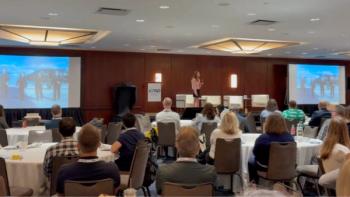
Experts at the 2026 APAO Symposium highlighted patient education, clinical trial updates, and professional development in cancer care.
Kennon McCollum explains how psychosocial, physical, and financial barriers impact treatment selection for patients with CLL.

Learn how oncology nurses can leverage clinical strategies, baseline testing, and targeted referrals to optimize patient vitamin D during treatment.

Adding anti-obesity medication for survivors who do not respond early to lifestyle changes helps 42% achieve clinically meaningful weight loss.

Andrew Evens, DO, and Joanna Rhodes, MD, discuss evolving CLL treatment paradigms, CAR T-cell therapy versus bispecific antibodies, and expanding community access to specialized lymphoma care.