

Sarah Donahue, MPH, AOCNP, shares what drew her to oncology, the daily challenges she faces as a nurse practitioner, and her advice to new oncology nurses on how to overcome those barriers.
Sarah Donahue, MPH, AOCNP, shares what drew her to oncology, the daily challenges she faces as a nurse practitioner, and her advice to new oncology nurses on how to overcome those barriers.
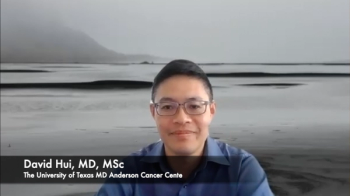
David Hui, MD, MSc, from The University of Texas MD Anderson Cancer Center, discusses how caregivers may prioritize communication when making end-of-life sedation decisions for loved ones with agitated delirium.

The implementation of the HuCare Quality Improvement Strategy supported superior emotional function for patients newly diagnosed with cancer.

Data presented at the 2021 ASCO Quality Care Symposium demonstrated that in-person interactions had a bigger impact of professional satisfaction than financial stability.

Within this intense experience, caregivers can often find themselves physically and emotionally exhausted

Joe Contreras, MD, chair of the Institute of Pain and Palliative Medicine, explains how some common misconceptions may be hindering patients from receiving potentially outcome-improving palliative care.

For National Hospice and Palliative Care Awareness Month, Joe Contreras, MD, spoke to Oncology Nursing News® about some common misconceptions between the 2 and how oncology nurses can more effectively speak with their patients about palliative care.

David Hui, MD, MSc, from The University of Texas MD Anderson Cancer Center, discusses the impacts of personal sedation goals for caregivers of patients with cancer experiencing end-of-life agitated delirium.

The COVID-19 pandemic has demonstrated that personalized medicine should consider social determinants of health disparities as well as genomic factors.

“Health care providers should be aware of this gap in care for dual-eligible patients and other vulnerable populations so that needs can be identified and resources can be appropriately directed.”

In addition to experiencing poor emotional health, a high percentage of nurses have experienced trauma and a desire to leave their position because of the COVID-19 pandemic.

A recent study found that nurses demonstrated a higher preference for deep sedation to treat patients with cancer-related delirium, compared with caregivers.

Kristin Rupp, RN, OCN, BSN, reminiscences about the experiences that made her the nurse she is today, and how she continues to pay it forward.

The implementation of the Oncology Nursing Society’s new Get Up, Get Moving Program helped patients increase their daily step intake and maintain their health-related quality of life.

A recent study identified some of the key challenges in coordinated care for underinsured and uninsured cancer survivors who have initiated the surveillance stage of their journey.
Rather than encouraging patients to acknowledge their sickness, it’s more valuable to have them recognize their wellness.

Anticipating these stressors and implementing specific strategies can help ease the distress and vulnerability felt by children and adolescents.
“When you’re donning that gown to go into a room, you’re donning exactly what that patient needs you to be.”

The impact of animal-assisted therapy is felt by more than just patients with cancer, explained Cynthia Ingram, BS, RN, HN-BC, COHN-S. Service animals like her dog, Tori, can also have a positive impact on the well-being of caregivers and health care providers.
“It’s a Privilege, I feel very honored to be helping patients.”

With a newfound abundance of available oral cancer therapies, it has become necessary for oncology nurses to ensure that their patients are adhering to treatment.

“I certainly think it is an opportunity to improve the nurse-patient relationship.”
From orchestrating local infusion appointments to making lunch for a patient, Kathleen Lutz, RN, NP-BC WH, constantly strives to provide an excellent level of supportive care.

African American, Asian, and Hispanic patients with limited-stage small cell lung cancer displayed superior survival outcomes compared with White patients, indicating that race might be linked with survival in this disease.

Lisa Cusaac never planned on being an oncology nurse. However, 25 years later she has spent her entire career providing care for patients with cancer and being an Oncology Nurse Champion.

“Looking at how the movement toward videoconferencing visits during the COVID-19 pandemic affects the nurse-patient relationship and the capacity to maintain high quality, supportive cancer care is essential…”

While there have been advancements in palliative care programs and clinician education, more still needs to be done, one expert says.

Only 4 of the 20 most common cancers have a proven screening method.

Each month, we take a look back at the most popular Oncology Nursing News® stories. Here are the top 5 stories from July 2020.

These findings have serious implications for future cancer care and underscore the need to resume cancer care and screening.