

The broadcast journalist discusses how her colleagues rallied together when her husband was diagnosed with colorectal cancer.
The broadcast journalist discusses how her colleagues rallied together when her husband was diagnosed with colorectal cancer.
Liquid biopsies are becoming essential in the lung cancer arena.

There are certain indicators for patients with lung cancer who may progress on osimertinib.

Combination therapy has been the biggest recent advance in the melanoma space, but there is still more work to be done, according to Douglas B. Johnson, MD.

After the USPSTF advised against prostate cancer screening for all men, there was a decrease in the incidence of the disease.

Genetic testing can be very beneficial to patients and their families. However, some people are still unsure about having it done.

Radiation dermatitis is a common adverse event for patients with head and neck cancer undergoing radiation therapy, but a new kind of dressing may help.
After the widespread use of targeted therapies for breast cancer treatment, there was a wider gap in mortality rates between black and white women with the disease.
Chemotherapy-induced periphreal neuropathy can affect patients' daily living, and some individuals may be more prone to it than others.
Oncology nurses are key in enrolling and helping patients through clinical trials.
Radiation's role continues to shift in the treatment of patients with prostate cancer.
A multidisciplinary care team is needed when treating patients who are given a combination of chemotherapy and immunotherapy.
How can disparities be mitigated when it comes to giving patients the newest and most innovative cancer treatments?
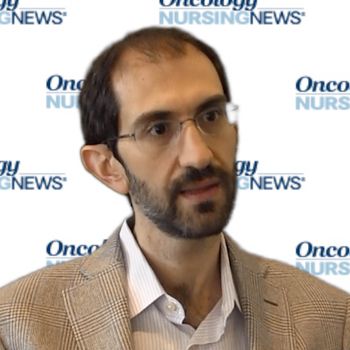
Emmanuel S. Antonarakis, MBBCh, an associate professor of oncology at Johns Hopkins Medicine, discussed updated National Comprehensive Cancer Network (NCCN) guidelines for the genetic testing of men with prostate cancer.

Telehealth is currently being used in cancer care and will continue to expand.
Oncology nurses are important team members when it comes to counseling patients and their families about hereditary cancers, according to Michele Settelmyer, APN, MSN, WHNP-BC, of the Saint Frances Medical Center.

Preimplantation genetic diagnosis allows women of childbearing age to select embryos that do not have genetic mutations.

Combining PARP inhibitors with another kind of agent may be key in overcoming resistance.
PD-L1 status may not be the best predictor when it comes to determining who will respond to checkpoint blockade.
Genetic mutations that were previously associated with breast and ovarian cancer also have implications for men with prostate cancer.
Oncology nurses are crucial in the management of cancer symptoms and treatment-related adverse events.

Many patients with cancer are prescribed opioids to manage post-surgical pain, putting oncology professionals in a prime position to affect the current epidemic.

Not many people knew about male breast cancer when Sam Rivera was diagnosed, but he took the information from his nurses to spread awareness about the disease.

Empathy and cultural competency are two vital traits for an oncology nurse to have.
All patients with myeloma should be treated for bone disease.
Each type of cancer treatment has its own adverse event (AE) profile, and BRAF and MEK inhibitors are no different.
CAR T-cell therapy is producing durable responses in many subgroups of patients. However, the treatment could also come with some major adverse events.

There are some adverse events that are common to all PARP inhibitors, and others that are specific to each drug.