
Opinion|Videos|October 8, 2026
Managing Adverse Events With Intravesical Therapies
Author(s)Kyle Johnson, MD, Sabrina Bologna, PA-C
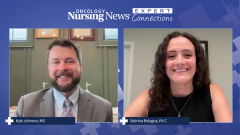
This segment addresses recognizing and managing adverse events, with nurses described as the care team's eyes on the ground.
Advertisement
Episodes in this series
This segment addresses recognizing and managing adverse events, with nurses described as the care team's eyes on the ground. The faculty monitor for signs of systemic absorption, including fever, chills, fatigue, nausea, and vomiting, and note that lab work can reveal problems before symptoms appear. Local effects include urinary retention, bladder spasms, and increased susceptibility to urinary tract infection (UTI). Most can be managed in clinic or by phone. The panel contrasts side effect profiles. Bacillus Calmette-Guérin (BCG) commonly causes UTI-like and flu-like symptoms that tend to be cumulative, and rare BCG sepsis can be life-threatening. Gemcitabine plus docetaxel and reverse thermal mitomycin gel mainly cause localized, self-limited urinary symptoms, with rare urethral stricture and uncommon systemic reactions. On escalation, the faculty describe reviewing urinalysis results and new symptoms before each treatment, and holding treatment for a urine culture when infection is suspected. They note that nitrite positivity alone does not always mean infection, and that clear protocols help nursing staff know when to contact the provider.
Advertisement
Related to this article
In observation of National PA Week, Moffitt PA Mark Honor discusses the expansion of APPs and key collaboration strategies for oncology nurses.
Beth Faiman details the new IMS/IMWG consensus definition of cure for multiple myeloma, requiring 5 years of treatment-free remission.

Oncology clinicians gathered to review relapsed CLL care options, CAR T-cell trial updates, and advanced practice provider roles.
At ASTRO 2026, Suresh Rana details how AI-driven contouring accelerates care timelines, requiring rigorous team monitoring and early nursing input.
At ASTRO 2026, Dr. Erica Braschi Jordan details toxicity tracking, physical therapy referral, and quality of life in proton regional nodal irradiation.
At ASTRO 2026, Dr. Mishaal Munir details how nurse-led triage workflows and prompt symptom escalations improve care for breast cancer brain metastases.
ASTRO 2026 presenter Kayla Kafka-Peterson details an Adapt-Adopt-Build model to bridge global brachytherapy nursing gaps and standardize perioperative care.
At ASTRO 2026, Dr. Nitin Ohri details additive versus synergistic toxicities when combining radiation with novel systemic therapies in clinical trials.
Advertisement
Advertisement
Trending on Oncology Nursing News
1
FDA Approves Maintenance Tucatinib for Advanced HER2+ Breast Cancer
2
IMS 2026: Beth Faiman Talks New Definition of Myeloma Cure and More
3
National PA Week: Mark Honor on the Growth of APPs in Oncology Care
4
IMS 2026: Beth Faiman Details First Consensus Definition of Myeloma Cure
5