
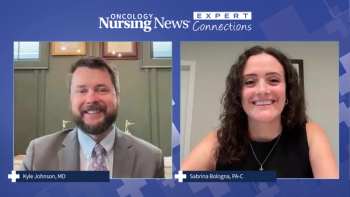
This segment explains how pathology from a transurethral resection of bladder tumor (TURBT) determines grade, stage, and risk category.
This segment explains how pathology from a transurethral resection of bladder tumor (TURBT) determines grade, stage, and risk category.
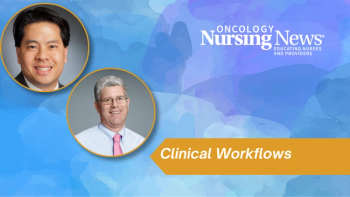
Co-developed by NYU Langone and Dana-Farber, the Solavia platform integrates EHR workflows, decision support, and pathway tracking for APPs and PAs.
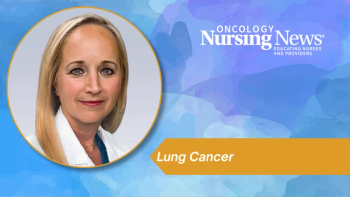
The FDA expands accelerated approval for sevabertinib to frontline HER2-mutant NSCLC, highlighting a need for vigilant nursing management of diarrhea.

NP Theresa Stukus and NP Nelli Zafman discuss the unique challenges of caring for younger patients with metastatic triple-negative breast cancer (mTNBC), emphasizing that treatment planning extends beyond disease management to encompass the patient's personal, family, and professional responsibilities.
NP Theresa Stukus and NP Nelli Zafman discuss how differences among available frontline antibody-drug conjugates (ADCs) can be used to individualize treatment for patients with metastatic triple-negative breast cancer (mTNBC).
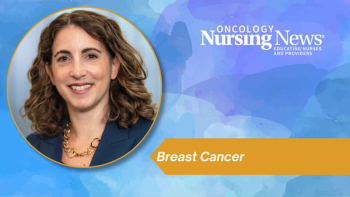
FDA approves camizestrant for ESR1-mutated advanced breast cancer, tasking oncology nurses with guiding patients through ctDNA-based surveillance.
Dana Delaski, MSN, FNP-BC, shares insights on how once-daily ruxolitinib, self-injected rusfertide, and givinostat will transform PV clinic workflows.
The FDA has approved oral iberdomide (Zenbexus) for relapsed/refractory multiple myeloma, offering patients a highly potent, accessible therapy.
Oncology clinicians must actively champion NCCN guidelines as a critical pillar of breast cancer survivorship care,
With daraxonrasib approved for metastatic pancreatic cancer, Yolanda Justal, APRN, discusses essential nursing workflows for home-based care.
NP Theresa Stukus and NP Nelli Zafman discuss key considerations when interpreting emerging frontline clinical trial data for antibody-drug conjugates (ADCs) in metastatic triple-negative breast cancer (mTNBC).
NP Theresa Stukus and NP Nelli Zafman discuss how recent advances in frontline antibody-drug conjugate (ADC) therapy are enabling a more individualized approach to the management of metastatic triple-negative breast cancer (mTNBC).

Beth Sandy, CRNP, of Penn Medicine explains how oncology nurses and pharmacists collaborate to manage financial toxicity and secure oral therapies.
First-line amivantamab+lazertinib may rewire EGFR-mutant NSCLC, curb resistance, and boost survival — plus proactive clinic management tips.
How chemo-free lung cancer combos like amivantamab+lazertinib boost survival, with tips to manage rashes and stay on therapy.
Prophylactic anticoagulation cuts VTE in lung cancer and helps patients stay on EGFR-targeted combos longer.
Proactive prophylaxis with amivantamab and lazertinib cuts rash, paronychia, and clots using daily skincare, antibiotics, and anticoagulation to keep patients on therapy.
Early COPERNICUS results show subcutaneous amivantamab and proactive VTE and skin prophylaxis sharply reduce reactions, helping NSCLC patients stay on therapy.
This opening segment introduces low-grade intermediate-risk non-muscle invasive bladder cancer (LG-IR-NMIBC) and establishes the anatomic and diagnostic vocabulary the rest of the program relies on.
At the 29th APAO Symposium, Mark Honor, PA-C, discussed the collaborative care model and the vital role of PAs in managing day-to-day oncology care.
NP Theresa Stukus and NP Nelli Zafman introduce the first clinical scenario featuring a young woman with newly diagnosed metastatic triple-negative breast cancer (mTNBC) and discuss the clinical and personal factors that influence frontline treatment selection.
NP Theresa Stukus and NP Nelli Zafman discuss the expanding role of oncology nurse practitioners and advanced practice providers in delivering comprehensive care for patients with metastatic triple-negative breast cancer (mTNBC).
At the 29th APAO Symposium, Jennifer Fisher, PA-C, discussed combining surgery, radiation, and novel systemic drugs to treat brain metastases.
At the 29th APAO Symposium, Dr. Angela Jia highlighted the critical role of PAs and NPs in managing toxicities and applying new ASCO data.
At the 29th APAO Symposium, Lifetime Achievement Award honoree Colleen Tetzlaff, PA-C, shared insights on adapting to rapid clinical advancements.

Kelsey Martin, APRN, discusses the tolerability and clinical benefits of frontline antibody-drug conjugates for metastatic TNBC.
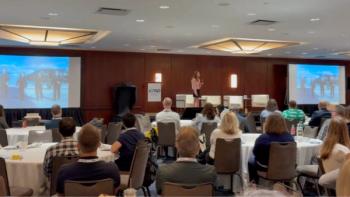
Experts at the 2026 APAO Symposium highlighted patient education, clinical trial updates, and professional development in cancer care.
Kennon McCollum explains how psychosocial, physical, and financial barriers impact treatment selection for patients with CLL.

Andrew Evens, DO, and Joanna Rhodes, MD, discuss evolving CLL treatment paradigms, CAR T-cell therapy versus bispecific antibodies, and expanding community access to specialized lymphoma care.
NP Theresa Stukus and NP Nelli Zafman discuss the essential role of comprehensive biomarker testing in guiding individualized treatment decisions for patients with metastatic triple-negative breast cancer (mTNBC).