

Opinion|Videos|February 19, 2025
Managing AEs Associated With Adagrasib for NSCLC
Medical experts discuss strategies for managing adverse events associated with KRAS-targeted therapies, addressing monitoring challenges with oral medications and balancing symptom management with treatment efficacy.
Advertisement
Episodes in this series
Video content above is prompted by the following:
- Can you discuss your strategies for managing associated AEs?
- How are you monitoring these AEs? Are there any challenges with monitoring when patients are on oral medications?
- How do you balance symptom management with maintaining treatment efficacy?
Advertisement
Related to this article
Lisa Carter-Bawa, PhD, MPH, APRN, explains how blame keeps patients from lung cancer care and how nurses can counter that stigma in the community.

At the 10th Annual School of Nursing Oncology, faculty said nurses need fast, disease-specific updates to educate patients and manage novel therapies.

Experts detail evidence for exercise, acupuncture, and mind-body care during radiation, and the knowledge and referral gaps that limit uptake.

Coral Omene, MD, PhD, discusses the clinical impact of breast cancer disparities and how oncology nurses can support diverse trial recruitment.

An ONS review presented at EONS19 outlines 7 system-level employer strategies to curb oncology nurse burnout and improve retention.
A Columbia nurse scientist shares her takeaways from the 2026 ASCO Quality Care Symposium, from geriatric assessment to care across the age span.
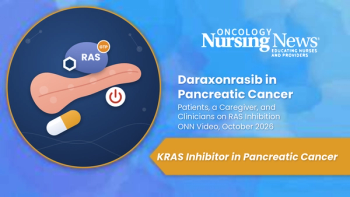
A patient, a caregiver, nurses, an NP, and an oncologist discuss rash prevention, dose holds, cost, and trial eligibility with oral daraxonrasib.
In a 117-patient cohort, 35% waited over 60 days for neoadjuvant chemotherapy, most often because of added workup, second opinions or comorbidities.
Advertisement
Advertisement