





Gastrointestinal Cancer
Latest News
Advertisement
Video Series
Latest Videos









Podcasts






















































Advertisement
More News

ASCO 2026 data show daraxonrasib doubles survival in pancreatic cancer. MSK’s Mary Larsen discusses oral adherence and managing signature side effects.

Retifanlimab plus chemotherapy improved survival and response rates in advanced anal cancer with manageable safety in phase 3 findings.

FDA accepts Zanidatamab combo sBLA for HER2+ gastroesophageal cancer, showing improved outcomes in HERIZON-GEA-01 trial with priority review underway.
The FDA has approved encorafenib plus cetuximab and fluorouracil-based chemotherapy in patients with BRAF V600E-positive metastatic colorectal cancer.

Patients with NRG1 fusion-positive cholangiocarcinoma who received zenocutuzumab had a favorable response rate in the phase 1/2 eNRGy trial.

The FDA updated its safety labeling for capecitabine and 5-FU to reflect that patients with certain genetic variants risk severe or fatal toxicities.
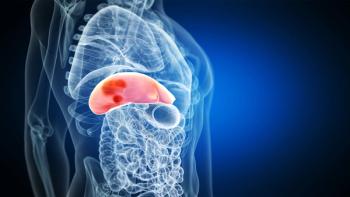
The frontline combination of nivolumab and ipilimumab demonstrated long-term safety and efficacy in patients with unresectable hepatocellular carcinoma.

The frontline combination of encorafenib, cetuximab, and FOLFIRI yielded significant improvement vs SOC in BRAF V600E-mutated metastatic colorectal cancer.

Data link physical activity with reduced cancer-related fatigue in patients with colorectal cancer.

Findings from a real-world, head-to-head comparison show greater colorectal cancer risk reduction and safety with the use of a GLP-1RA vs aspirin.

Median PFS over 1 year and median OS over 2 years have been observed for the first time in a phase 3 trial for gastroesophageal adenocarcinoma.

ECOG performance status of 1 was linked with worse patient-reported outcomes in patients with gastric or gastroesophageal junction adenocarcinoma.
Zolbetuximab plus mFOLFOX6 and nivolumab led to meaningful gains in patients with unresectable gastric/gastroesophageal junction adenocarcinoma.

As CAR T-cell therapy expands to solid tumors, oncology nurses play a key role in monitoring, educating, and supporting patients.

What should nurses know about treating patients with KRAS G12C-mutated metastatic colorectal cancer using adagrasib and cetuximab?
Catch up on recent regulatory decisions by the FDA in oncology, including actions in lung, hematologic, genitourinary, and gastrointestinal cancers.
The FDA has approved durvalumab plus FLOT for the treatment of patients with resectable gastric or gastroesophageal junction adenocarcinoma.
Durvalumab plus FLOT chemotherapy improved overall survival in resectable gastric or gastroesophageal junction cancer, per phase 3 MATTERHORN data.

Frontline lenvatinib, pembrolizumab, and chemotherapy did not lead to increased overall survival vs chemoimmunotherapy in patients with advanced ESCC.

Adding zabilugene almadenorepvec to SOC chemotherapy and nab-paclitaxel was safe and effective in patients with metastatic pancreatic ductal adenocarcinoma.

Ponsegromab increased body weight in patients with cancer-associated cachexia, yielding greater improvement in those who received ponsegromab previously.

Subcutaneous pembrolizumab has been approved across all indications, cutting chair and administration times with a median injection time of 2 minutes.

In a phase 1 study, ELI-002 2P improved relapse-free survival in pancreatic and colorectal cancer, with stronger benefit in patients with T-cell responses.

A care model led by advanced practice nurses was feasible in providing supportive care and linking providers through post-trial care transitions.
Advertisement
Advertisement
Trending on Oncology Nursing News
1
Male Breast Cancer: Managing Endocrine Therapy and Survivorship Care
2
AI Breast Cancer Risk Models Guide Triage and Nurse-Led Patient Counseling
3
Nurses Can Catch Breast Cancer Lymphedema Early With Baseline BIS
4
Sunvozertinib Now Available in US for Pretreated EGFR Exon 20+ NSCLC
5