

Destiny-Breast09 PROs demonstrated higher quality of life and fewer gastrointestinal symptoms in patients with HER2-positive advanced breast cancer.
Destiny-Breast09 PROs demonstrated higher quality of life and fewer gastrointestinal symptoms in patients with HER2-positive advanced breast cancer.

Age and having had children were found to affect whether premenopausal women with breast cancer opted for fertility preservation.

Breast cancer survivors improved cognitive outcomes with both real and sham acupuncture, but real acupuncture showed greater gains.

Giredestrant displayed a safety profile consistent with prior findings and had a lower rate of discontinuation compared with standard endocrine therapy.
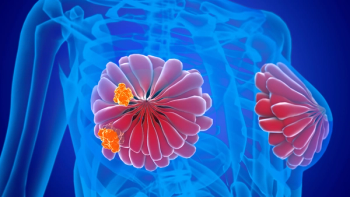
Frontline maintenance tucatinib plus trastuzumab and pertuzumab increased progression-free survival in patient with HER2-positive metastatic breast cancer.

A mobile health intervention was linked with an increase in general and cancer-specific QOL in adolescent and young adult breast cancer survivors.

Hormone replacement therapy was associated with a lower risk of developing BRCA1- or BRCA2-mutated breast cancer among those already at higher risk.

Preoperative radiation and pembrolizumab improved T-cell infiltration in patients with higher-risk, HR-positive, HER2-negative, early-stage breast cancer.
The use of sacituzumab govitecan to treat HR+/HER2– metastatic breast cancer did not reach its primary end point of progression-free survival.
Ribociclib plus endocrine therapy shows PFS benefit in luminal B/HER2E breast cancer subtypes compared to chemotherapy, especially with low immune-related gene expression.

In line with its safety and efficacy profile, T-DXd preserved quality of life and neurological function in patients with HER2-positive metastatic breast cancer, irrespective of brain metastases.

Additional exploration may help fully realize the impact of combining immunologic approaches with PARP inhibition, says one expert.
The combination treatment of elacestrant and abemaciclib provided clinical benefit with acceptable safety in patients with ER-positive, HER2-negative advanced or metastatic breast cancer.

Baseline ctDNA presence was associated with larger tumor size and higher residual disease burden scores following neoadjuvant endocrine therapy in HR-positive, early breast cancer.

Perioperative atezolizumab did not improve outcomes in patients with triple-negative breast cancer.
A phase 1 trial of camizestrant with ribociclib appears safe and effective in patients with ER+/HER2- advanced breast cancer.
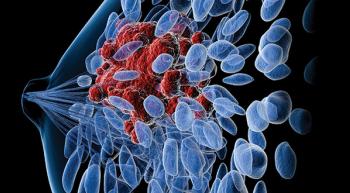
According to real-world data, no survival advantage was seen when comparing 3 frontline CDK4/6 inhibitor combinations in HR-positive, HER2-negative metastatic breast cancer.

“This benefit in local recurrence translates into a later difference in distant recurrence and breast cancer [mortality], but it’s only apparent with long follow-up,” according to the study author.

Neoadjuvant camrelizumab paired with chemotherapy could represent a new option in early or locally advanced triple-negative breast cancer.

Palbociclib plus anti-HER2 therapy and endocrine therapy improved progression-free survival in the first-line maintenance of palbociclib in HR-positive, HER2-positive metastatic breast cancer.

High-grade immune-related adverse effects occurred in 18.9% of older patients with early-stage breast cancer treated with immune checkpoint inhibitors, according to a multi-institutional study.
Adjuvant olaparib continued to show a strong efficacy benefit in patients with BRCA1/2 mutation–positive, HER2-negative high-risk breast, according to 6-year data from the OlympiA trial.
Neoadjuvant patritumab deruxtecan demonstrated comparable responses with lower high-grade adverse effects in patients with high-risk, HR–positive, HER2-negative breast cancer.
Imlunestrant, alone or in combination, may provide an all-oral, targeted therapy option following progression for patients with ESR1-mutant, ER-positive, HER2-negative advanced breast cancer.

T-DXd improved PFS, vs treatment of physician’s choice, irrespective of time to progression or type of endocrine resistance among patients with hormone receptor-positive, HER2-low/-ultralow metastatic breast cancer.
Disitamab vedotin either alone or with TKIs, ICIs, or other antiangiogenic agents were consistently effective in patients with HER2-positive or -low breast cancers.
Treatment with pegylated liposomal doxorubicin and cyclophosphamide in the neoadjuvant setting, followed by a taxane, in addition to trastuzumab and pertuzumab, resulted in antitumor activity in patients with HER2-positive breast cancer.

The survival benefit derived from T-DM1—particularly invasive disease-free survival and overall survival—persisted throughout 8 years of follow-up in HER2-positive early breast cancer with residual invasive disease.
Findings presented at the 2023 San Antonio Breast Cancer Symposium described some possible avenues for artificial intelligence to be useful in breast cancer care.

The 5-year event-free survival rate was 81.3% with neoadjuvant pembrolizumab/chemotherapy followed by adjuvant pembrolizumab, compared with 72.3% in those who received placebo/chemotherapy plus placebo.