
At the 29th APAO Symposium, Jennifer Fisher, PA-C, discussed combining surgery, radiation, and novel systemic drugs to treat brain metastases.
At the 29th APAO Symposium, Jennifer Fisher, PA-C, discussed combining surgery, radiation, and novel systemic drugs to treat brain metastases.
At the 29th APAO Symposium, Dr. Angela Jia highlighted the critical role of PAs and NPs in managing toxicities and applying new ASCO data.
FDA approves daraxonrasib, a first-in-class daily oral RAS inhibitor, doubling survival in metastatic pancreatic adenocarcinoma patients.
Emily Beard discusses how nurse navigators act as essential bridges, leveraging clinical intuition and time to address complex patient needs.
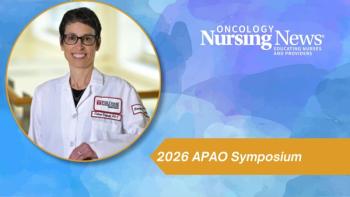
At the 29th APAO Symposium, Lifetime Achievement Award honoree Colleen Tetzlaff, PA-C, shared insights on adapting to rapid clinical advancements.

FDA approves two Ziihera combinations as a first-line treatment standard for adults with HER2-positive advanced gastroesophageal adenocarcinoma.

Kelsey Martin, APRN, discusses the tolerability and clinical benefits of frontline antibody-drug conjugates for metastatic TNBC.
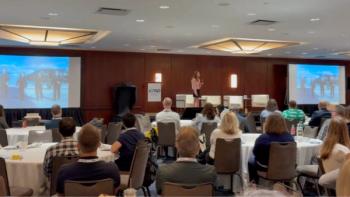
Experts at the 2026 APAO Symposium highlighted patient education, clinical trial updates, and professional development in cancer care.
Kennon McCollum explains how psychosocial, physical, and financial barriers impact treatment selection for patients with CLL.

Learn how oncology nurses can leverage clinical strategies, baseline testing, and targeted referrals to optimize patient vitamin D during treatment.

Adding anti-obesity medication for survivors who do not respond early to lifestyle changes helps 42% achieve clinically meaningful weight loss.

Andrew Evens, DO, and Joanna Rhodes, MD, discuss evolving CLL treatment paradigms, CAR T-cell therapy versus bispecific antibodies, and expanding community access to specialized lymphoma care.

A JAMA study of 73,042 veterans shows active surveillance for low-risk prostate cancer rose to 93%, with notable racial and social disparities.
How oncology nurses can dismantle patient myths, secure early dietitian referrals, and collaborate to optimize supportive care like vitamin D.

A JAMA Surgery study of 2.7M patients reveals decade-long increases in surgical delays, with significant racial and socioeconomic disparities.

Oncology clinical trial nurse navigator Elise Curry, RN, breaks down the key clinical questions surrounding the FDA approval of oral iberdomide.
FDA grants Humanitarian Device Exemption for OncoSil, the first Class III device delivering targeted P-32 microparticles for distal bile duct cancer.
Oncology clinical trial nurse navigator Elise Curry, RN, explains the impact of the FDA's approval of oral iberdomide for multiple myeloma.

A meta-analysis shows traditional pathology counts fail to predict which patients benefit from adding hormone therapy to postoperative radiation.
The FDA granted accelerated approval to iberdomide with daratumumab and dexamethasone for relapsed/refractory multiple myeloma.
Oncology social worker Kelly Dyckman, LCSW, shares key strategies for identifying patient distress, demystifying counseling, and managing trauma.

AMH and INHB testing can identify premenopausal patients with HR+/HER2- breast cancer who may safely avoid chemotherapy, sparing unnecessary toxicity.
Duke Blood Cancer Center's Melissa LaMirand, FNP-C, discusses quad therapies, bispecific workflows, and nursing standardization in multiple myeloma.
Emily M. Beard, BSN, RN, OCN, CBCN, BHCN, discusses the vital role of oncology nurse navigation in addressing barriers to care and improving outcomes in cancer survivorship.
FDA approves Tudriqev-nivolumab for advanced melanoma. Learn key clinical trial data, dosing math, and safety rules for oncology nursing teams.
A social worker explains how patient "difficulties" are often trauma-based fight, flight, freeze, or fawn responses to a health crisis.
Dr. Michael Wong discusses clinical workflows, dosing calculations, and biosafety protocols for the newly approved Tudriqev-nivolumab regimen.
Theresa Lynne Harrington Stukus, ANPBC NP, discusses patient compliance, side effect management, and screening anxiety in breast cancer care.

A new study reveals global gaps in integrative oncology knowledge, highlighting communication and the role of APPs in community settings.
New Phase 3 ENDURANCE trial data shows no survival benefit for indefinite lenalidomide maintenance over 2 years in non-transplant myeloma patients.