




Genitourinary Cancer
Latest News
Advertisement
Latest Videos









Shorts

0:40
Patient education for pembrolizumab + SOC in high-risk localized prostate cancer
7 months ago
by
Zin W Myint, MD
Podcasts






























































Advertisement
More News

Abiraterone/prednisone plus olaparib improves survival outcomes vs monotherapy or sequential use in BRCA1/2- or ATM-altered mCRPC.

Explore safety and efficacy findings from KEYNOTE-B15/EV-304, LITESPARK-011, and more from the ASCO Genitourinary Cancers Symposium.

An early but temporary decline in QOL followed by later cognitive effects and pain was seen in patients with RCC receiving adjuvant durvalumab/tremelimumab.

Adding 177Lu-PSMA-617 to ADT and an ARPI maintained health-related quality of life in patients with metastatic hormone-sensitive prostate cancer.

Phase 3 LITESPARK-011 trial results demonstrated PFS and ORR benefits with belzutifan plus lenvatinib vs cabozantinib in advanced ccRCC after ICI therapy.
Final phase 3 EORTC 1333/PEACE-3 data show enzalutamide plus radium-223 extends OS and radiographic progression-free survival in mCRPC with bone metastases.

Neoadjuvant EV plus pembrolizumab significantly improved event-free survival and overall survival vs gemcitabine/cisplatin in the phase 3 KEYNOTE-B15 trial.

Patients with PTEN-deficient metastatic hormone-sensitive prostate cancer had improved rPFS with capivasertib plus abiraterone.

A device delivering tumor treating fields has been approved for concurrent treatment with gemcitabine and nab-paclitaxel for patients with LA-PAC.

When patients with RCC progress on a TKI/IO combination, advanced practice providers use patient experience to inform treatment decisions.
Margarita Huober, AGNP, AOCNP, explains that understanding a patient on an individual level leads to more informed care decisions in RCC.

The FDA has approved niraparib and abiraterone acetate with prednisone for the treatment of patients with BRCA2-mutated metastatic hormone-sensitive prostate cancer.

Catch up on recent regulatory decisions by the FDA in oncology, including actions in lung, hematologic, genitourinary, and gastrointestinal cancers.
The FDA has approved intravenous or subcutaneous pembrolizumab combined with enfortumab vedotin-ejfv in the neoadjuvant and adjuvant MIBC settings.
The addition of atezolizumab to BCG did not yield improved EFS compared with BCG alone in patients with high-risk non–muscle-invasive bladder cancer.

Disitamab vedotin/toripalimab improved PFS and OS vs chemotherapy in HER2-expressing advanced urothelial carcinoma, per phase 3 RC48-C016 data.

Adding perioperative durvalumab to neoadjuvant chemotherapy did not worsen health-related quality of life for patients with muscle-invasive bladder cancer.
Patient-reported outcomes showed that health-related QOL stayed at baseline for patients with HRRM-positive mHSPC receiving a niraparib regimen.
Subcutaneous pembrolizumab has been approved across all indications, cutting chair and administration times with a median injection time of 2 minutes.

When treating patients with bladder cancer using gemcitabine intravesical system, regular AE monitoring is necessary, said Gary Steinberg, MD.
Formerly known as TAR-200, gemcitabine intravesical system has received the FDA’s approval for use in patients with BCG-unresponsive NMIBC.

IMvigor011 showed significant improvement in survival outcomes with adjuvant atezolizumab in ctDNA-positive MIBC.

New data showed a 72.2% DOR rate in patients with recurrent low-grade, intermediate-risk non–muscle-invasive bladder cancer who had a CR at 3 months.
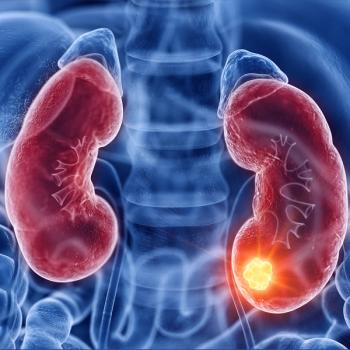
Levels of kidney injuring molecule–1 appear to be predictive of therapeutic benefit in patients with renal cell carcinoma.
A personalized neoantigen vaccine may be effective in patients with clear cell renal cell carcinoma, shared David A. Braun, MD, PhD.
Advertisement
Advertisement
Trending on Oncology Nursing News
1
FDA Expands Anktiva Approval to Papillary-Only BCG-Unresponsive NMIBC
2
On-Body Injectors: What Oncology Nurses and PAs Need to Know
3
Metastatic Breast Cancer: An NP and a Nurse-Patient on Hope and Honesty
4
Understanding Opdivo Qvantig® (nivolumab and hyaluronidase-nvhy): A Cancer Treatment with A Faster Delivery*
5