

Compared with CAR T-cell therapy, autologous hematopoietic cell transplantation lowered relapse and progression rates in relapsed large B-cell lymphoma.
Compared with CAR T-cell therapy, autologous hematopoietic cell transplantation lowered relapse and progression rates in relapsed large B-cell lymphoma.

A new targeted therapy showed promising response rates in pediatric and adult patients with relapsed/refractory KMT2A rearranged acute leukemia.
Overall, 65.9% of patients who received the combination of pelabresib and ruxolitinib demonstrated a 35% or greater reduction in spleen volume by week 24.
Adding navitoclax to ruxolitinib improved spleen volume reduction, but not total symptom score in patients with myelofibrosis.

The use of pirtobrutinib following covalent Bruton tyrosine kinase inhibitor therapy may be an important sequencing approach in chronic lymphocytic leukemia/small lymphocytic lymphoma, according to recent research.
Remote patient monitoring following CAR T-cell therapy may reduce costs while allowing nurses to maintain a close eye on patient parameters, although more research is needed to refine the process of alerting virtual nurses of potential issues.
At 11.3 months of follow-up, magrolimab, rituximab, gemcitabine, and oxaliplatin yielded an overall response rate of 51.5%, including a complete response rate of 39.4%, among patients with relapsed or refractory diffuse large B-cell lymphoma.

Nilesh Kalariya, PhD, AGPCNP-BC, AOCNP; and Laura J. Zitella, MS, RN, ACNP-BC, AOCN, discuss practice-changing presentations from the 64th American Society of Hematology Annual Meeting and Exposition.
Among 17 patients with mantle cell lymphoma, the complete remission rate with first-line treatment with zanubrutinib plus rituximab followed by short-course rituximab plus dexamethasone, high-dose cytarabine, and oxaliplatin was 88.2%.
Nilesh Kalariya, PhD, AGPCNP-BC, AOCNP, discusses key data of interest from the 2022 American Society of Hematology Meeting.
Laura J. Zitella, MS, RN, ACNP-BC, AOCN, highlights her top takeaways from the 64th American Society of Hematology Annual Meeting and Exposition.
Adding induction to standard chemoimmunotherapy followed by autologous stem cell transplantation and maintenance ibrutinib was highly effective in patients with mantle cell lymphoma.

Zanubrutinib demonstrated a superior reduction in the risk of progression or death for patients with relapsed or refractory chronic lymphocytic leukemia or small lymphocytic lymphoma compared with ibrutinib.

Mosunetuzumab, an off-the-shelf outpatient therapy with a fixed duration of treatment, demonstrated promising responses in patients with relapsed/refractory follicular lymphoma.
Aaron T. Gerds, MD, MS, unpacks data seen with momelotinib for patients with anemic myelofibrosis.
Heavily pretreated patients with Waldenström macroglobulinemia demonstrated encouraging responses with pirtobrutinib, a non-covalent BTK inhibitor.
In the second line setting, lisocabtagene maraleucel (liso-cel; Breyanzi) significantly reduced the risk of an event for patients with high-risk relapsed/refractory large B-cell lymphoma, compared with standard-of-care chemoimmunotherapy induction.
Blinatumomab plus consolidation chemotherapy demonstrated a survival advantage for patients with newly diagnosed minimal residual disease–negative B-cell acute lymphoblastic leukemia.
Patients with acute lymphoblastic leukemia who received vincristine-based regimens with TKIs did not experience more chemotherapy-induced peripheral neuropathy vs those who did not.
A nonrestrictive diet was found to be noninferior to a protective diet in the post-stem cell transplant setting, suggesting that lifting restrictions may improve patient quality of life.
Real-world data from patient-reported outcomes suggest that axicabtagene ciloleucel is associated with temporary worsening of quality of life with statistically and clinically significant improvements within 1-year postinfusion.
Adding daratumumab to bortezomib, lenalidomide, and dexamethasone showed meaningful improvements in patient-reported outcomes in the phase 2 GRIFFIN trial.
A comparative analysis indicated that lisocabtagene maraleucel generated superior quality of life in patients with relapsed/refractory large B-cell lymphoma compared with the current standard of care.
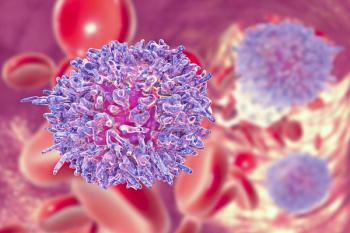
Patients with high levels of amphiregulin were at a higher risk of an early death in acute graft-versus-host-disease, according to a presentation at the 2021 ASH Annual Meeting.
Belantamab mafodotin is an antibody-drug conjugate that functions by targeting BCMA and has demonstrated clinically meaningful activity in relapsed/refractory multiple myeloma.
Acalabrutinib was linked to a lower incidence of cardiovascular-related toxicities and overall toxicity burden compared with ibrutinib in patients with chronic lymphocytic leukemia.
Axicabtagene ciloleucel improved the quality of life in patients with relapsed/refractory large B-cell lymphoma receiving the agent as a second-line therapy.
A presentation at the 2021 ASH Annual Meeting revealed a significant association between elevated white blood counts and thrombotic events among patients with polycythemia vera and controlled hematocrit levels.
Ibrutinib, both in the frontline setting and in the form of continuous treatment, was associated with improved quality of life over chemoimmunotherapy for patients with chronic lymphocytic leukemia.
Tisagenlecleucel evoked similar efficacy and a preferrable safety profile in children and adults with B-ALL being treated in a real-world analysis, compared with the clinical trial ELIANA.