






Breast Cancer
Latest News
Advertisement
Latest Videos




























































Advertisement
More News

Katie Couric is educating the public about the importance of ultrasounds for women with dense breasts.

At a follow-up of 60-months, investigators found that breast cancer survivors with higher C-reactive protein counts reported worse cognitive function over time.

Olaparib is an oral drug manufactured in 150-mg and 100-mg tablets. Olaparib is taken by mouth, twice daily. It can be taken without or without food.

HER2-directed antibody-drug conjugates (ADCs) play an important role in the treatment of breast and gastric cancer.

Selpercatinib demonstrated a promising efficacy profile in patients with RET-fusion positive solid tumors.

Following promising efficacy data from the phase 3 TROPiCS-02 trial, the FDA has granted sacituzumab govitecan priority review status on the indication of HR+/HER2 metastatic breast cancer.
Shared practical advice on the management of toxicities associated with antibody drug conjugate therapy in both the breast cancer and GI cancer settings.
Before closing out their discussion on HER2+ gastric cancer, experts review clinical trials investigating other novel ADC agents in this setting.

At the 2022 ASCO Quality Care Symposium, an adverse event analysis showed that abemaciclib has a manageable safety profile and that dose reductions may be a key aspect of appropriate symptom management.

Structured preceptorships promote competence, confidence, and job satisfaction in new oncology nurse practitioners.

Elacestrant, an oral selective estrogen receptor degrader, may hold the potential to replace intramuscular fulvestrant injections for patients with endocrine receptor–positive, HER2-negative breast cancer.
Panelists share their perspective on the role of the broader, multidisciplinary healthcare team in managing toxicity associated with trastuzumab deruxtecan therapy.
Comprehensive insight on the optimal management of diarrhea associated with ADC therapy, with regard to patient education and monitoring during treatment.

By certain accounts, the breast cancer awareness ribbon was actually peach before it was pink.
Shifting focus to the second patient profile of HER2+ gastric cancer, key opinion leaders highlight the risk and management of diarrhea in this setting.
Panelists briefly review ongoing clinical trials with trastuzumab deruxtecan in the setting of HER2+ gastric cancers.

Selpercatinib was approved by the FDA for RET fusion–positive non–small cell lung cancer and locally advanced or metastatic RET fusion–positive solid tumors.
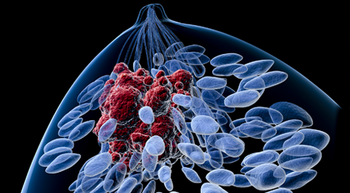
For patients receiving an aromatase inhibitor for hormone receptor–positive, HER2-negative breast cancer, the addition of abemaciclib doubled median progression-free survival vs placebo.
Focused discussion on the management of antibody drug conjugate–related adverse events in gastric cancer, with a focus on neutropenia.
A broad overview of the treatment armamentarium for patients receiving first- or second-line therapy for HER2+ gastric cancer.

In this episode of “The Vitals,” Christine Miaskowski, PhD, RN, discusses research showcasing that adult patients receiving either a platinum-based chemotherapy, taxane alone, or a combined regimen of platinum- and taxane-based treatment may be at risk of hearing loss.
Centering discussion on a patient profile of HER2+ gastric cancer, experts in oncology discuss the occurrence of neutropenia with trastuzumab deruxtecan therapy.
Before closing out their discussion on antibody drug conjugate use in breast cancer management, panelists consider ongoing clinical trials in this setting.
Patients with triple-negative breast cancer who received pembrolizumab in the neoadjuvant and adjuvant settings demonstrated similar health-related quality-of-life scores compared with patients who received placebo.

A quality-of-life analysis of the pivotal Destiny-Breast04 trial showed that trastuzumab deruxtecan outperformed physician’s choice of treatment in delaying definitive deterioration.
Advertisement
Advertisement
Trending on Oncology Nursing News
1
Nursing Protocols for the New Oral RAS Inhibitor Daraxonrasib
2
FDA Approves Camizestrant for ESR1-Mutated Advanced Breast Cancer
3
Thoracic Oncology Advances and Toxicity Management
4
Managing Daraxonrasib: Key Takeaways and Efficacy Insights for Oncology Nurses
5