
The field of oncology continues to evolve, driven by novel drug approvals, innovative delivery technologies, and emerging care strategies in cancer survivorship.
The field of oncology continues to evolve, driven by novel drug approvals, innovative delivery technologies, and emerging care strategies in cancer survivorship.
Pertuzumab-qcay is the second FDA-approved biosimilar to Perjeta, but a settlement with Genentech delays its US launch until Q3 2028.
The FDA declined to approve ivonescimab plus chemotherapy after EGFR TKI therapy, citing no statistically significant OS gain in HARMONi.

Cancer care teams are supporting more patients than ever, and oncology teams are navigating the clinical and operational realities that come with that growth.
A 5-decade SEER analysis found 5-year survival in young patients rose from 60% to 90%, yet non-Hispanic Black patients fared worst across cancers.
Nurses earn public trust through quiet acts of compassion, reassurance, and presence — a vital lifeline especially in oncology care.
Modeling projects anthracycline recipients may lose a median 9.4 life-years to age acceleration, a finding with survivorship care implications.

Oncology NPs and PAs are key to closing workforce gaps. Here’s how generalist, specialist, and hybrid APP models improve access and outcomes.
Perioperative durvalumab with enfortumab vedotin given only before cystectomy cut the risk of an EFS event by 49% in the phase 3 VOLGA trial.

With 10 years of oncology nursing experience, Lee Grabb highlights how nurse navigation, human connection, and compassion transform holistic cancer care.
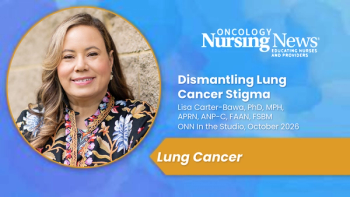
Lisa Carter-Bawa, PhD, MPH, APRN, explains how blame keeps patients from lung cancer care and how nurses can counter that stigma in the community.
A study of 6 palliative care programs tied trust, proximity, and real-time communication with oncology teams to higher hospice use.

At the 10th Annual School of Nursing Oncology, faculty said nurses need fast, disease-specific updates to educate patients and manage novel therapies.
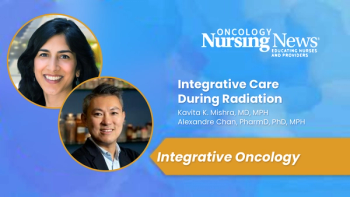
Experts detail evidence for exercise, acupuncture, and mind-body care during radiation, and the knowledge and referral gaps that limit uptake.
The PCR-based tissue assay can now identify patients with MSI-high solid tumors who may be candidates for pembrolizumab.
An 18-year analysis of a foundation program found trial-related travel, lodging, and caregiving costs varied by income, distance, and trial phase.

Coral Omene, MD, PhD, discusses the clinical impact of breast cancer disparities and how oncology nurses can support diverse trial recruitment.
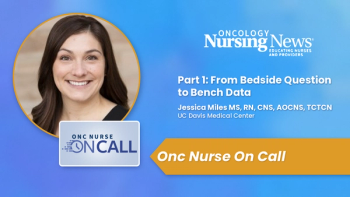
Jessica Miles, MS, RN, CNS, explains how bench testing showed pumps and filters did not compromise stem cell infusion safety.
The oral CSF-1R inhibitor produced a 54% response rate vs 3% with placebo at week 25 in the phase 3 MANEUVER trial.
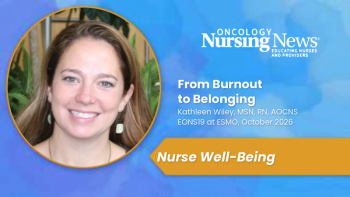
An ONS review presented at EONS19 outlines 7 system-level employer strategies to curb oncology nurse burnout and improve retention.
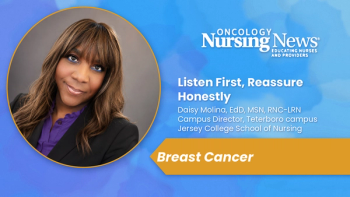
Daisy Molina, EdD, MSN, RNC-LRN, discusses listening, honest reassurance, and lifelong communication skills for nurses facing hard conversations.
In 1,071 women diagnosed at 40 or younger, lower income was tied to delayed presentation and younger age to delayed diagnosis.
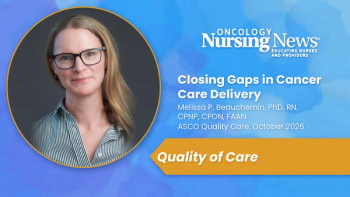
A Columbia nurse scientist shares her takeaways from the 2026 ASCO Quality Care Symposium, from geriatric assessment to care across the age span.
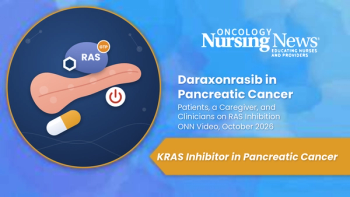
A patient, a caregiver, nurses, an NP, and an oncologist discuss rash prevention, dose holds, cost, and trial eligibility with oral daraxonrasib.
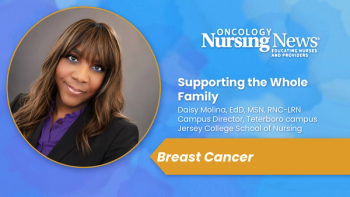
Daisy Molina, EdD, MSN, RNC-LRN, explains how nurses can include caregivers in breast cancer care while keeping the patient's voice central.
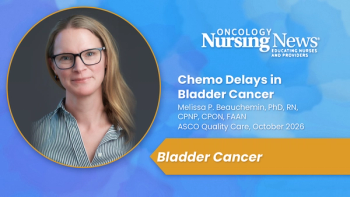
In a 117-patient cohort, 35% waited over 60 days for neoadjuvant chemotherapy, most often because of added workup, second opinions or comorbidities.
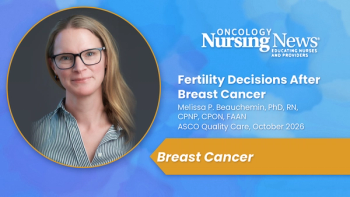
Interviews with 15 young women with breast cancer show fertility preservation decisions unfold under time pressure and carry into survivorship.
FDA grants accelerated approval to amivantamab and hyaluronidase-lpuj for recurrent or metastatic head and neck squamous cell carcinoma.
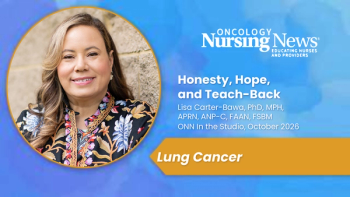
Lisa Carter-Bawa, PhD, MPH, APRN, explains how nurses can counter lung cancer fatalism by pairing honesty with hope and using teach-back.
A COA survey found inconsistent coverage and upfront costs top the barriers to cellular therapy in independent community oncology practices.