
In a 117-patient cohort, 35% waited over 60 days for neoadjuvant chemotherapy, most often because of added workup, second opinions or comorbidities.
In a 117-patient cohort, 35% waited over 60 days for neoadjuvant chemotherapy, most often because of added workup, second opinions or comorbidities.
Interviews with 15 young women with breast cancer show fertility preservation decisions unfold under time pressure and carry into survivorship.
FDA grants accelerated approval to amivantamab and hyaluronidase-lpuj for recurrent or metastatic head and neck squamous cell carcinoma.
Lisa Carter-Bawa, PhD, MPH, APRN, explains how nurses can counter lung cancer fatalism by pairing honesty with hope and using teach-back.
A COA survey found inconsistent coverage and upfront costs top the barriers to cellular therapy in independent community oncology practices.
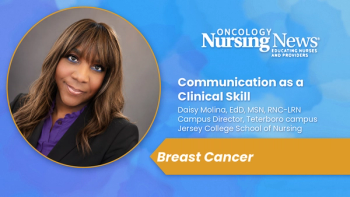
Daisy Molina, EdD, MSN, RNC-LRN, details how nursing students learn to deliver hard news with empathy, plain language, and team support.

Among 90 patients with ES-SCLC, all CRS in the outpatient cohort was grade 1, and no patient in any care model was readmitted.
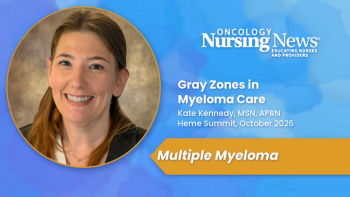
At the 2026 National Summit on Hematologic Cancers, Kate Kennedy, MSN, APRN, flagged decisions where guidelines give nurses and APPs little direction.
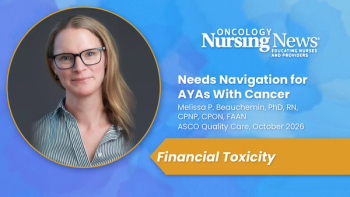
Interim AYA-NAV data show most navigation components reached young patients with cancer as designed, though full sessions lagged during treatment.
Kate Kennedy, MSN, APRN, explains how Vanderbilt-Ingram's award-winning APP clinic moved bispecific step-up dosing out of the hospital.
By 26 months, 81% of families of children with B-ALL reported job or marital changes; less frequent maintenance pulses eased expenses only.
Nurses and NPs share how they manage rash, stomatitis, diarrhea, dose holds, cost, and trial eligibility with oral daraxonrasib in pancreatic cancer.
As bispecifics and cell therapies move outpatient, Kate Kennedy, MSN, APRN, says nurses and APPs should focus on education and atypical infections.
Nicole Doell, MSN, RN, of Sylvester explains how nurses can address breast cancer misinformation without judgment and share vetted resources.

A 3-minute video and quick-reference list of October's 7 FDA cancer approvals, with the biomarker and monitoring points nurses need for each.
Oral vitamin C did not slow clonal growth in the phase 2 EVITA trial but was linked to longer survival.
Sylvester's Nicole Doell, MSN, RN, discusses how oncology nurses can support patients with breast cancer emotionally, from diagnosis to survivorship.
Kathryn Shady, PhD, RN, OCN, discusses research on emotional dissonance and vicarious trauma among hematology/oncology nurses.

Daraxonrasib, tarlatamab, an mRNA melanoma therapy and ivonescimab led ESMO 2026. Tell us which findings you can act on now.
At an Oncology Nursing News roundtable, APPs discussed earlier lifileucel referral, IL-2 dosing, and toxicities that emerge after discharge.
Suzanne E. Barron, CRNP, explains how education, premedication, and pharmacy coordination streamline intravesical gene therapy treatment days.
Leslie Smith, DNP, shares how nurses at any hospital can work around limited time, heavy workloads, and slow approvals to get involved in research.
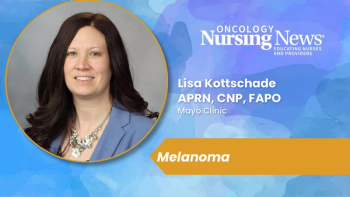
At an ONN Case-Based Roundtable, APPs discussed when to raise TIL therapy in melanoma and how to prepare patients for lymphodepletion and IL-2.
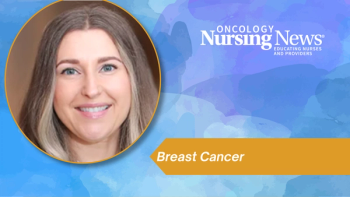
Ellery Palanuk, MSN, RN, CN-BN, explains how navigators rely on multidisciplinary teams and tumor boards as breast cancer treatment evolves.
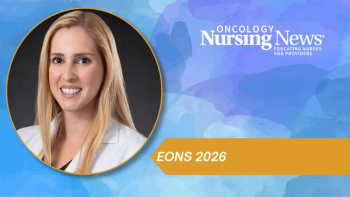
At EONS 2026, a City of Hope nurse practitioner explains how shifting immunotherapy from infusion to injection can free nurse and chair time.
Dana-Farber nurse practitioners reflect on cross-country networking, resource gaps, and ADC education needs after JADPRO Live 2026.
An NP-led roundtable reviewed 3L+ trial data in metastatic colorectal cancer and shared nursing strategies for myelosuppression, dosing, and goals.

New ANA guidance sets shared duties for nurses, leaders, and educators and favors restorative responses over zero-tolerance policies.

In TALAPRO-3, adding talazoparib to enzalutamide cut the risk of radiographic progression or death by 52%; anemia was the leading toxicity.
A Fox Chase intervention raised trial-naïve patients' understanding of placebo use and randomization; its effect on enrollment is still untested.